
 Sarah Kim
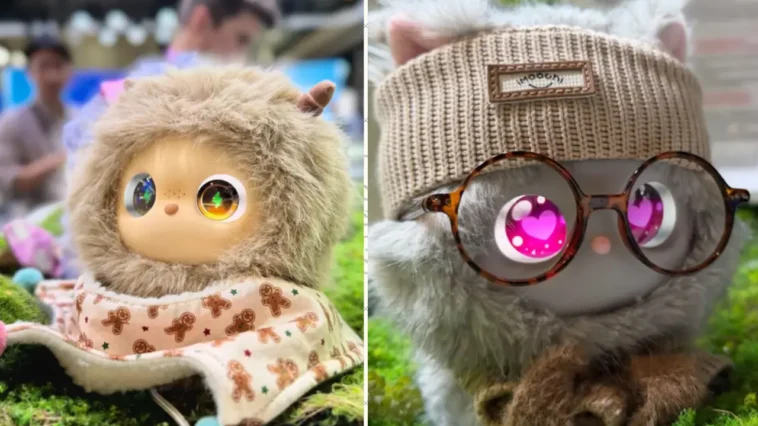
No one expected a pet to be one of the biggest talking points at the world’s largest mobile tech show — but ZTE iMoochi did exactly that at MWC Barcelona 2026. ZTE Corporation officially unveiled the iMoochi at its March 2, 2026 exhibition stand as part of its bold “AI for All” strategy and CNET’s reviewer, who walked into the booth expecting smartphones, wrote that the moment the iMoochi blinked its OLED eyes at her, she genuinely forgot she was at a tech show. Know who iMoochi was designed for according to ZTE: young urban professionals who cannot keep real pets, animal lovers, and families looking for something genuinely new to share.
What Is iMoochi
ZTE iMoochi is a physical AI companion device designed to simulate the emotional experience of owning a real pet without the feeding, grooming, or veterinary bills. It covers itself in a cloud-soft furry texture, responds to touch and voice, and uses mechanical movements to express mood including head shakes, tail wags, and nuzzling. Sources say ZTE describes iMoochi as part of a new product category it calls “AI New Species” devices that exist beyond the smartphone but carry full AI personality systems inside a physical body.
ZTE iMoochi: Meet the Five Characters
The iMoochi family currently has five distinct members, each carrying its own personality, appearance, and behavioural quirks:
- Hopami — Energetic and playful, the most active of the five in demonstrations
- Mimiu — Calm and affectionate, responds most strongly to gentle touch
- Cynomi — Curious and alert, reacts quickly to new sounds and temperature changes
- Mogogo — Bold personality, the most expressive when tossed or moved rapidly
- Morin — Gentle and shy, takes longer to warm up — mimicking introverted pet behaviour
How iMoochi Interacts
The iMoochi responds to physical and environmental stimuli in ways that closely mirror real animal behaviour. A gentle pat on the head triggers a nuzzle response. Prolonged stroking makes it coo softly and settle into a comfortable position. Sources say the device even responds to the sensation of being tossed into the air ZTE calls this “the sense of weightlessness response” with a startled, then playful reaction.
The OLED Eye System
Perhaps the most visually arresting feature of the iMoochi is its eye system two OLED screens embedded in the face that blink, wink, and shift expressions in real time based on mood state. The OLED panels automatically adjust brightness based on ambient light, so the eyes look natural in both bright outdoor settings and dim indoor environments. Insiders suggest the eye display module is the single component that makes iMoochi feel genuinely alive to first-time viewers several MWC attendees described the eye contact moment as unexpectedly emotional.
Emotional AI States
ZTE built a full internal emotional simulation system into the iMoochi that operates on its own internal rhythm:
- Hunger state: Simulated at regular intervals, triggering seeking behaviour and soft vocalisations
- Tiredness: The iMoochi yawns, slows its movements, and eventually enters a rest state
- Temperature sensitivity: Reacts to hot or cold environments with distinct physical responses
- Playfulness: Activates when the user engages in rapid or energetic interaction
- Contentment: Expressed through soft sounds and reduced movement after extended positive interaction
- Diary mode: The iMoochi logs emotional states and interactions, readable through the companion app
The Companion App
A dedicated mobile app connects to the iMoochi and unlocks several additional features beyond the physical interaction layer. Through the app, users can name their iMoochi, check its current mood state in real time, and read its personal diary — a log of daily interactions written in the iMoochi’s own unique character voice. Reports suggest the diary feature was one of the most discussed elements at the MWC demo stations, with several visitors spending significant time reading their iMoochi’s entries during hands-on sessions.
The iMoochi Language
ZTE created a custom audio language for the iMoochi not human speech, not animal sounds, but something ZTE engineers describe as a purpose-built communication system unique to each character. Insiders suggest this decision was deliberate: by giving the iMoochi its own linguistic identity rather than mapping it to existing sounds, ZTE avoided comparisons to existing robotic pets and created a communication style that feels genuinely original. Not publicly disclosed is the exact technical architecture behind the sound generation system.
Who iMoochi Is For
ZTE officially positions the iMoochi across three core user groups:
- Young urban professionals who experience daily stress and want a non-screen companion for emotional relief
- Animal lovers living in rental properties, small apartments, or cities where keeping a live pet is impractical or prohibited
- Families who want an interactive shared experience that works for children and adults simultaneously
- Reports suggest early MWC visitor feedback also identified a fourth group: people with social anxiety or loneliness who responded strongly to the iMoochi’s non-judgmental interaction style
The Labubu Comparison
CNET’s MWC 2026 reviewer immediately compared iMoochi to Labubu the viral collectible art toy by Pop Mart that took over global pop culture in 2024 and 2025. The comparison is visual and cultural rather than technical: both feature big expressive eyes, a soft collectible aesthetic, and intense desirability among a broad audience that crosses age groups. Insiders suggest ZTE is fully aware of the Labubu cultural moment and designed the iMoochi’s visual identity to sit in that same emotional territory cute, slightly strange, and intensely personal.
iMoochi vs Real Robotic Pets
The iMoochi sits in an interesting market space between digital virtual pets and existing robotic pet products:
| Feature | ZTE iMoochi | Sony Aibo | Labubu (Pop Mart) |
| AI personality system | Yes | Yes | No |
| OLED emotion display | Yes | No | No |
| Companion app diary | Yes | Limited | No |
| Collectible characters | 5 members | Single model | Dozens |
| Price | Not disclosed | ~₹2,00,000+ | ~₹3,000 to ₹30,000 |
| AI emotional states | Yes | Yes | No |
Technical Backbone
The iMoochi uses touch sensors and voice recognition as its primary input systems. ZTE confirmed the use of generative AI algorithms to interpret incoming stimuli and generate appropriate responses making each iMoochi’s reaction slightly different even to identical inputs, mimicking the unpredictability of a real animal. Not publicly disclosed are the internal processor, battery life, charging method, or exact weight and dimensions of the production unit.
The nubia M153 Connection
ZTE launched the iMoochi alongside the nubia M153 an AI-native smartphone co-developed with ByteDance that integrates the Doubao AI assistant at operating system level. The nubia M153 runs on Snapdragon 8 Elite with 16GB RAM and 512GB storage, and allows users to execute complex cross-app commands through a single natural language instruction. Sources say the iMoochi and the nubia M153 together represent ZTE’s argument that AI belongs in every device category simultaneously not just in smartphones.
Price and Availability
Not publicly disclosed is the retail price of the iMoochi for any market. ZTE has not confirmed a specific launch date, launch country, or distribution partner as of March 4, 2026. Reports suggest China will receive the first commercial units ahead of a wider global rollout, following the same pattern ZTE used for the nubia M153’s December 2025 developer launch.
Also Read: The 8 Most Stunning MWC 2026 Concepts That Will Change Everything
ZTE walked into MWC 2026 and made the entire tech world stop to look at a tiny furry creature with OLED eyes and a personal diary. That is not easy to do.
Would you buy a ZTE iMoochi as a stress-relief companion, or does an AI pet feel like a step too far even in 2026? Drop your honest take in the comments below.


GIPHY App Key not set. Please check settings