
 Sarah Kim
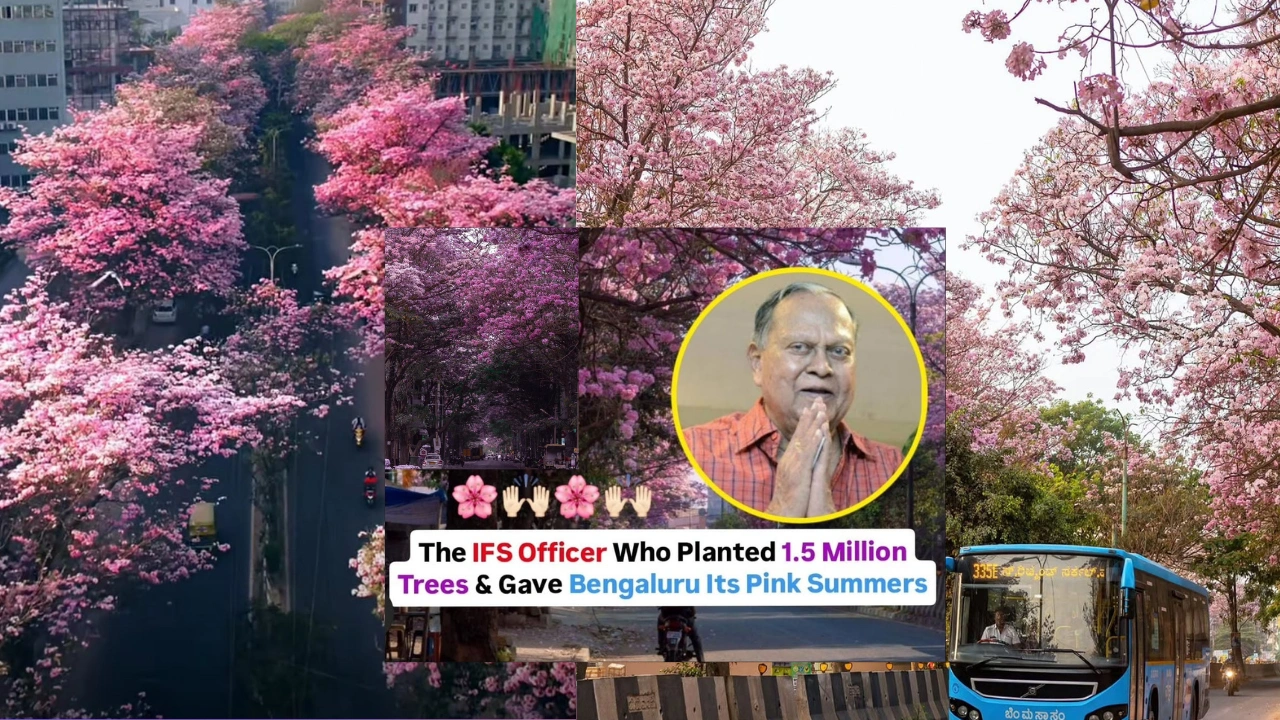
Every spring, when Bengaluru’s roads turn pink with blooming Tabebuia trees, few people know the man behind that beauty. IFS Officer Sethuram Gopalrao Neginhal — also known as S.G. Neginhal — planted more than 1.5 million trees across the city between 1982 and 1987, a feat that earned him the title of pioneer of urban forestry in India. Know who changed the way India thinks about city greening: it was this one quiet, determined forest officer from Karnataka.
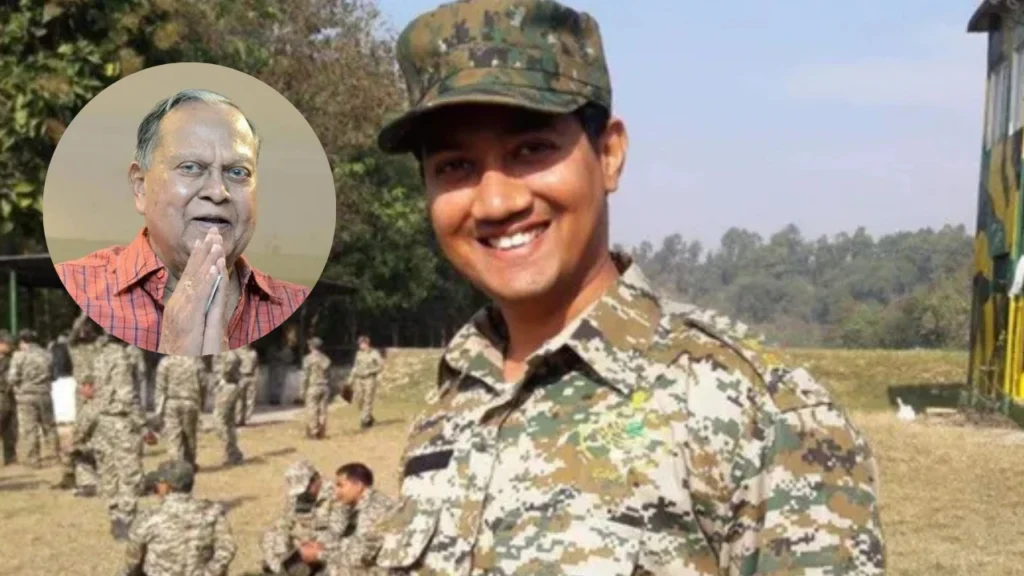
The Problem Sethuram Gopalrao Neginhal Solved
Bengaluru was losing its green cover fast in the early 1980s as concrete construction spread across the city. Saplings planted by earlier drives failed because they were too small — barely one foot tall — and could not survive traffic and urban pressure. Sources say the Karnataka Chief Minister himself grew frustrated with the repeated failures and demanded a new approach.
IFS Officer Sethuram Gopalrao Neginhal Steps In
The Karnataka government approved a separate urban forestry division and brought Neginhal in to lead it in 1982. He did not rush — he first walked neighbourhood by neighbourhood, studying soil, sunlight, and traffic patterns before selecting a single species. Insiders suggest this patient, research-driven approach was what made his drive succeed where all earlier efforts had failed.
The Species He Chose
Neginhal selected trees carefully based on shade, beauty, fast growth, and adaptability to Bengaluru’s climate. Among the key species planted was Tabebuia rosea, the pink-flowering tree that now defines the city’s skyline every March. Reports suggest he also planted Rain Trees, Gulmohar, and other canopy species along major roads and residential stretches.
How He Protected the Saplings
- Let saplings grow to at least 6 feet tall in nurseries before planting them
- Designed low-cost bamboo and mesh tree guards to replace expensive concrete ones
- Planted trees at 2 AM on busy roads to avoid disrupting traffic
- Set up 8 to 10 nurseries across the city, each housing up to one crore saplings
- Appointed nearly 350 tree wardens as community volunteers to monitor trees
People Made It Possible
Neginhal believed the government alone could not protect trees — he needed citizens. He visited localities personally, gave away free saplings, and involved Chief Ministers, MLAs, teachers, and school students in plantation drives. Sources say he even sent saplings in lorries directly to neighbourhoods so that no one had any excuse not to plant.
Five Years, One Legacy
By the end of five intense years of work, more than 1.5 million trees stood across Bengaluru’s roads and neighbourhoods. This work earned the Karnataka Forest Department’s Bangalore Urban Division the prestigious Indira Priyadarshini Vriksha Mitra Award, given by India’s Ministry of Environment and Forests. Reports confirm this was the first time a city-level plantation project of this scale had ever been recognised at the national level.
Beyond the City
Neginhal’s contributions extended far beyond Bengaluru’s streets. He played a key role in launching Project Tiger and helped establish Bandipur Tiger Reserve as the first tiger reserve in Karnataka and in all of South India. Sources say he also coined the term “Tiger Reserve” — a phrase that was later formally added to India’s Wildlife Protection Act as an amendment in 2007.
Awards and Recognition
- Indira Priyadarshini Vriksha Mitra Award — Ministry of Environment and Forests, Government of India
- Outstanding Civil Servant Award (2010) — The Kumble Foundation, for forestry and wildlife contributions
- Wildlife Photography Award (2012) — Bharatiya Vidya Bhavan and E Hanumantha Rao Trust
- Not publicly disclosed: whether Neginhal ever received a Padma award despite decades of service
His Final Years
Sethuram Gopalrao Neginhal was born on May 1, 1929, and passed away on May 2, 2021 — one day after his 92nd birthday. He remained active with his camera and pen well into his final years, continuing to write about forests, wildlife sanctuaries, and the trees of the Western Ghats. Reports suggest he authored multiple field books on forest trees of South India, leaving behind a body of written work as enduring as the trees he planted.
Why It Matters Now
Urban heat islands are rising across Indian cities, and Bengaluru itself now faces large-scale tree felling for infrastructure projects. Sources say Neginhal’s model — community ownership, species selection, pre-grown saplings, and night-time planting — remains a blueprint no modern urban planner has fully replicated. Know who gave one of India’s most famous cities its identity: it was not a government scheme or a corporate CSR campaign — it was one man’s vision and five years of relentless work.
1.5 million trees. One man. No social media. No viral campaign. Do you think India’s cities today could produce another S.G. Neginhal — or has that era of quiet, committed public service passed us by? Tell us in the comments below.


GIPHY App Key not set. Please check settings